New Yorkers Who Live Next to a Stadium Say They Can't Take It Anymore
Noise complaints by residents of Forest Hills Gardens, an enclave in Queens that hugs Forest Hills Stadium, have led to legal wrangling and petitions.
By James Barron
August 20, 2024
Today we'll look at Forest Hills Gardens, Queens, where concerts have taken the place of the U.S. Open, to the dismay of some residents. .
NYT subscribers can click here to read this article on the NYT Site
The noise meters were on again over the weekend in Forest Hills Gardens, an enclave in Queens that hugs Forest Hills Stadium.
The neighborhood had been quiet since late June, free of the concerts that regularly fill the 100-year-old stadium — and anger residents who say that noise spills out and disrupts their evenings. That changed on Friday, when the Australian rock band King Gizzard and the Lizard Wizard began a two-night gig.
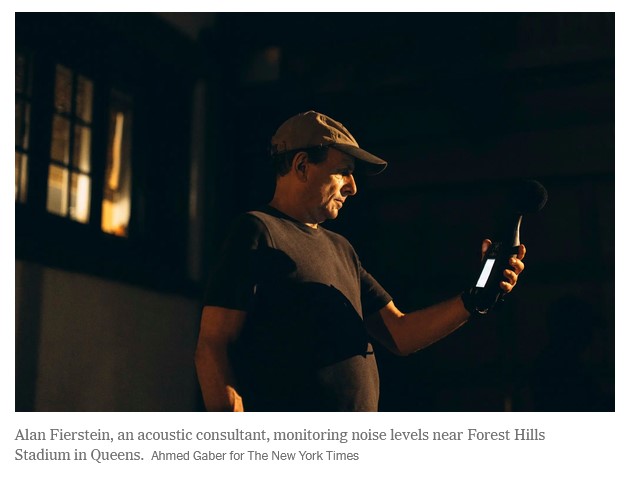
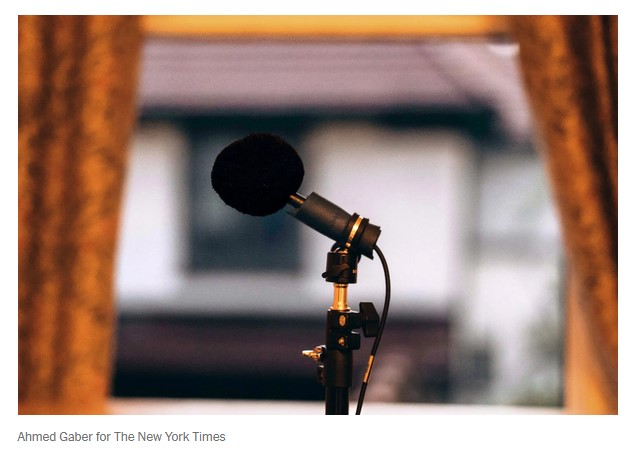
"The thunder, the rattling, the shaking windows — this is what people are complaining about," said Alan Fierstein, an acoustic consultant hired by several residents to measure sound levels in their homes during the concert. At one house a little less than 600 feet from the stage, he said, the music regularly violated the city's noise code.
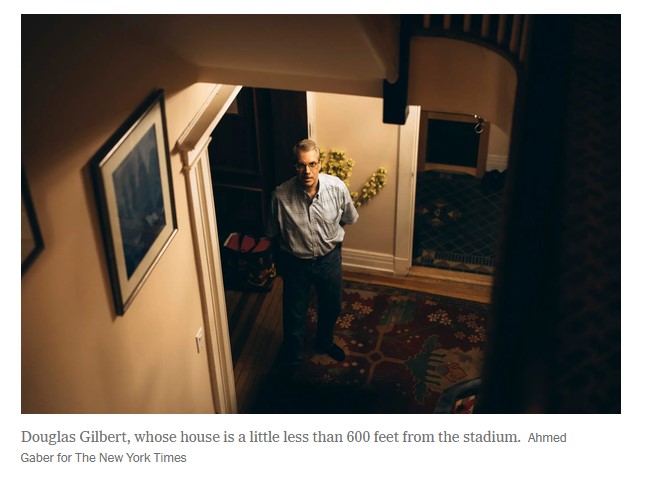
The homeowner, Douglas Gilbert, said that during some concerts, "the windows rattle constantly for two or three hours." He said that he had noticed doors shaking, and that during a concert last year, a chandelier in the front hall jiggled.
"It's unlivable to be in any room in the house," he said.
Residents' noise complaints have led to legal wrangling and petitions. Tiebreaker Productions, the promoter that has a long-term lease on Forest Hills Stadium, says that more than 20,000 people have signed an online petition in support of the venue.
"I enjoy getting to easily walk to live music right down the street," one signer wrote. Another, who said she lived nearby, said the stadium was "a greater neighbor than some of our human neighbors here."
On the legal front, the most recent decision favored the stadium. Last week, a judge dismissed a lawsuit filed by a group called Concerned Citizens of Forest Hills against the West Side Tennis Club, which controls the stadium and rents it to Tiebreaker. (Gilbert was one of the plaintiffs.) The judge, Robert Caloras of State Supreme Court in Queens, said the Concerned Citizens group had failed to show that noise from the stadium was either a public or a private nuisance.
But a different judge, ruling in a separate case, said that the nonprofit corporation that manages the Forest Hills Gardens community had established that the concerts were a public nuisance. That judge, Joseph Esposito, also of State Supreme Court in Queens, said that an independent sound expert should monitor noise levels from the stadium. He told the corporation, not the stadium or the promoter, to cover the expense.
The stadium, which opened in 1923, was long home to the U.S. Open — the cross street closest to Gilbert's house is Tennis Place. But the stadium's history includes off-season appearances by everyone from the Beatles to Bob Dylan to the Rolling Stones.
Tiebreaker arrived a decade ago, paying rent to the tennis club, along with an "honorarium" to the Forest Hills Gardens Corporation. But the stadium and the promoter said that the corporation had demanded far higher fees for the 2023 season.
The corporation said it went to court when "concerts far exceeded the original commitment of shows per year." It said the stadium had scheduled 37 concerts so far this year, up from 35 last year, 27 in 2022 and 16 in 2019, the last season before the coronavirus pandemic. The corporation said it, too, was monitoring noise levels.
John Kelly, a spokesman for the stadium and Tiebreaker, said that $1.5 million of the $15 million that was spent to refurbish the stadium had gone to "sound mitigation."
Fierstein called it "Band-Aid soundproofing" that would do little to limit bass frequencies, the loudest on the spectrum. His solution, short of putting a roof over the stadium, would be to surround attendees with dozens of small speakers in the stadium that would "concentrate sound on the audience."
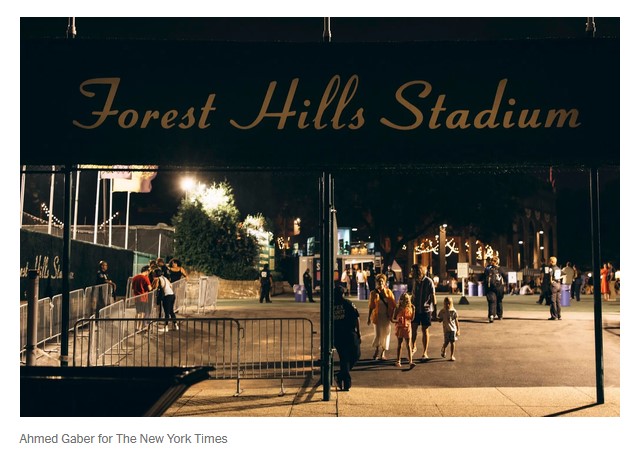
The city sent its own noise inspectors to the neighborhood on Friday. In two homes, they took readings that were in violation of the noise code. Only one summons is being issued. The agency said it could not write more than one summons per concert, no matter how many violations it finds, because of restrictions in city regulations and court decisions.
Beth DeFalco, a deputy commissioner of the city's Department of Environmental Protection, said the city had been "trying to work with the stadium to help them find ways to lessen the noise from concerts." The agency said the summons from Friday was the second this year. Two summonses were issued last year and six in 2022 for excessive noise after 10 p.m., the time when concerts are supposed to end.
 ®
®